The residential pool industry has undergone a quiet revolution over the past decade. Equipment that was standard ten years ago is being phased out. Chemical protocols that were considered best practice are being revised. The way professionals maintain pool water today is fundamentally different from how they did it in 2015, and the shift affects every pool owner whether they realize it or not.
Understanding these changes helps you make better decisions about equipment upgrades, chemical purchases, and maintenance routines. The old advice is not wrong — it is simply optimized for a different era of pool technology.
Variable-Speed Pumps Changed Everything
Single-speed pumps ran at full power all the time. They consumed enormous amounts of electricity and filtered water quickly but inefficiently. The standard practice was to run the pump four to eight hours per day at maximum speed.
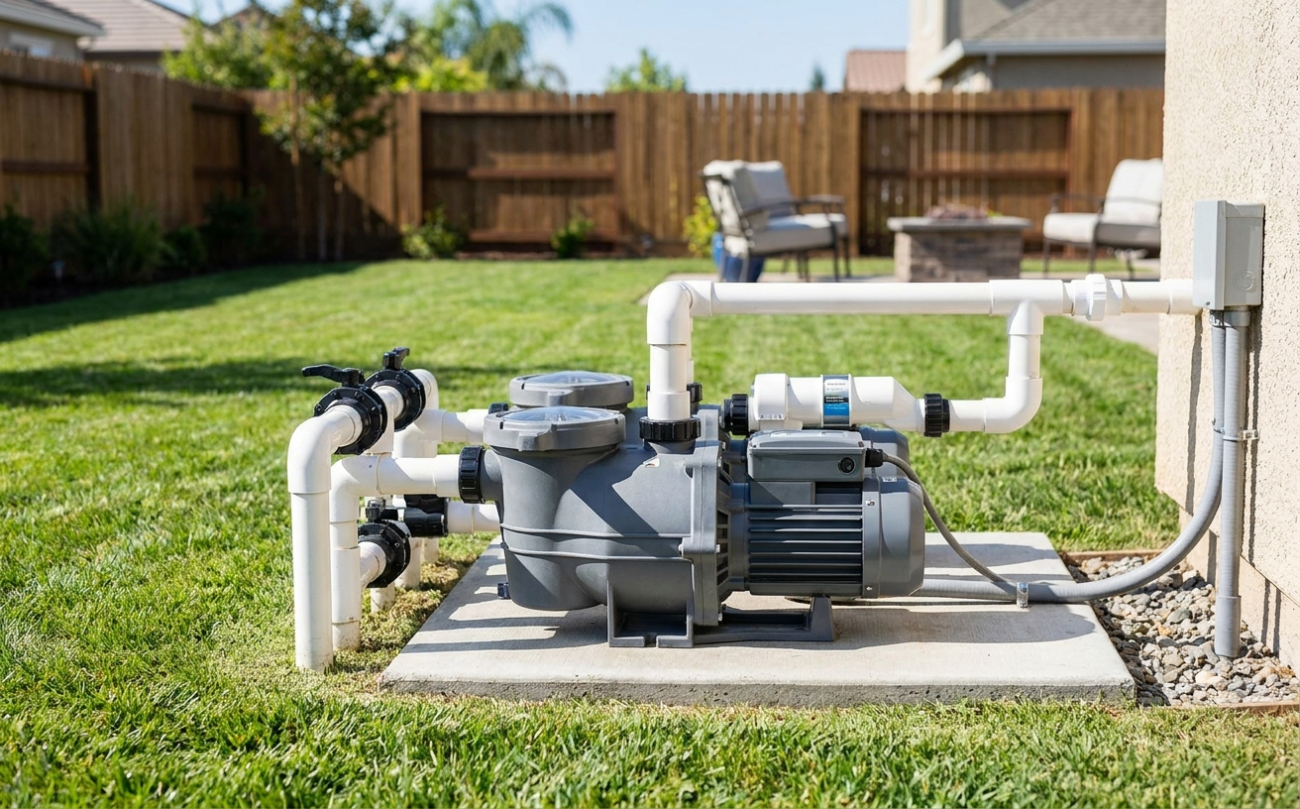
Variable-speed pumps changed the calculation. Running the pump at low speed for twelve to sixteen hours moves the same volume of water as running at high speed for four to six hours, but uses a fraction of the electricity. The longer run time also provides more consistent chemical distribution and better filtration, because water passes through the filter media more slowly and particles are captured more effectively.
This shift has chemical implications. Longer pump run times mean chlorine is distributed more evenly throughout the day, reducing the peaks and valleys in chlorine concentration that allow algae to establish. Pools with variable-speed pumps typically maintain more stable chemistry with less chemical input because the circulation is constant rather than intermittent.
Salt Chlorine Generators Redefined Chlorine Management
Adding chlorine manually, whether through tablets, liquid, or granules, creates a cycle of over-dosing and under-dosing. The chlorine level peaks after addition and declines steadily until the next dose. This cycle creates periods where chlorine is too high, which wastes chemical and irritates swimmers, and periods where it is too low, which allows contaminants to proliferate.
Salt chlorine generators produce chlorine continuously at a controlled rate. The generator produces exactly what the pool needs, adjusting for demand through its output setting. The result is a steady chlorine level that stays within the target range without the peaks and valleys of manual addition.
The trade-off is that salt generators raise pH continuously through the electrolysis process. This requires more frequent acid addition than manual chlorine pools. The maintenance trade is less chlorine management and more pH management. For most owners, this is a favorable trade because pH is easier to adjust than chlorine dosage.
The Move Away from Trichlor Tablets
Trichlor tablets were the default chlorine source for decades. They are convenient, dissolve slowly, and provide consistent chlorine delivery. But they also add cyanuric acid to the water with every tablet, and cyanuric acid accumulates over time because it does not evaporate or break down.
High cyanuric acid levels reduce chlorine effectiveness. Above fifty ppm, chlorine becomes progressively less active. Above one hundred ppm, the chlorine in the pool is largely ineffective regardless of the measured concentration. This is called chlorine lock, and the only practical solution is partial water replacement to dilute the cyanuric acid.
The industry is moving toward chlorine sources that do not add stabilizer: liquid chlorine, cal-hypo, and salt generators. This shift reduces the risk of cyanuric acid accumulation and the need for periodic water replacement. According to iGarden’s pool industry insights, this transition is the most significant change in residential pool chemistry management in the past twenty years.
Automation and Monitoring
Real-time water chemistry monitors that measure pH, chlorine, and temperature continuously are replacing the weekly test-strip routine. These monitors connect to apps that alert you when a parameter drifts out of range, allowing correction before a problem develops rather than after.
The value is not the measurement itself, which you can get from a test strip. The value is the frequency. Weekly testing provides seven data points per parameter per week. Continuous monitoring provides thousands. The difference is between seeing a trend and guessing at one.
Automated chemical dispensers that adjust pH and chlorine based on real-time measurements are the next step. These systems eliminate the manual dosing cycle entirely and maintain chemistry within a narrow range continuously. They are currently expensive and primarily used in commercial pools, but the technology is filtering down to residential applications.
What This Means for Your Maintenance Routine
If your pool still uses a single-speed pump and trichlor tablets, your maintenance routine is optimized for equipment from a previous generation. You are spending more on electricity, adding more chemicals, and managing more instability than necessary.
The upgrade path is straightforward. A variable-speed pump reduces electricity costs by fifty to seventy percent and improves filtration quality. A salt chlorine generator eliminates manual chlorine addition and stabilizes chlorine levels. Together, these two changes reduce weekly maintenance time and chemical costs significantly.
You do not need to upgrade everything at once. Start with the variable-speed pump, which provides the largest cost saving. Add the salt generator when your current chlorine system needs replacement. Each upgrade reduces the effort and cost of maintaining your pool while improving water quality.
The pool industry is not changing for the sake of change. It is responding to real problems: high energy costs, chemical waste, and water quality instability. The new equipment and protocols solve these problems directly. The owners who adopt them spend less time and money maintaining their pools and get better results. The ones who stick with the old ways are working harder for worse outcomes.

